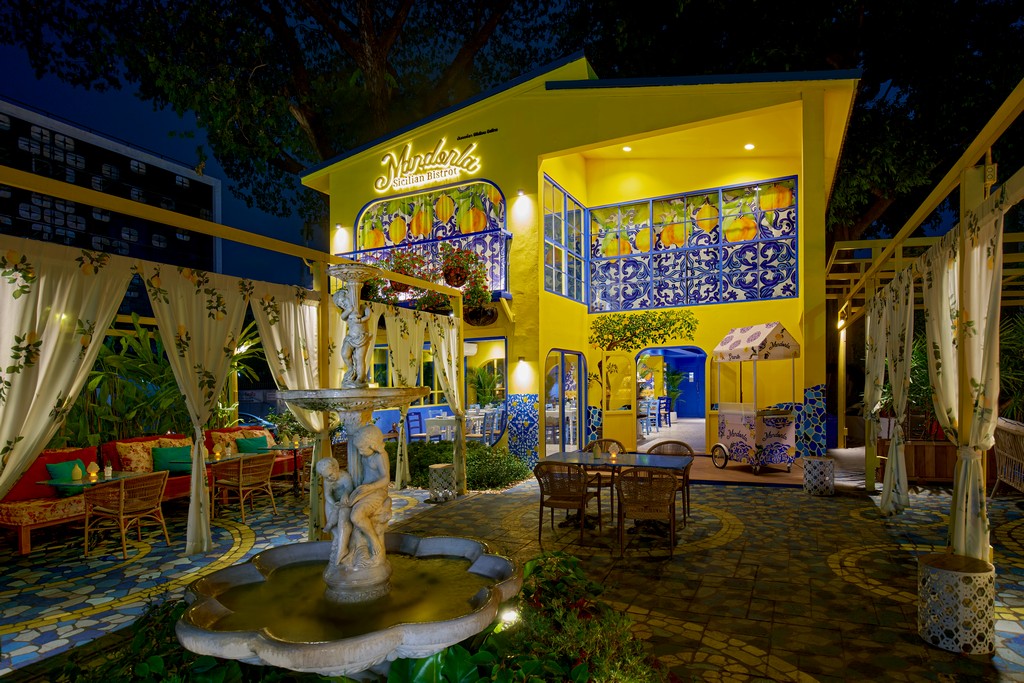
Sicilian food is the cooking of Sicily, the island at the toe of Italy, and it is the most layered regional cuisine in the country. Greeks, Arabs, Normans and Spanish all ruled the island, and each left something on the plate. In practice that means more seafood, citrus and almond than the rest of Italy, couscous, aubergine dishes like pasta alla Norma, and a dessert tradition of its own: cannoli, cassata and granita. In Chiang Mai you can eat it at Mandorla Sicilian Bistrot in Nimman, the Sicilian restaurant in Chiang Mai, open daily from 16:00 to 23:00. See the menu or book a table.
This guide explains where Sicilian food comes from, the dishes that define it, and how to eat it the way Sicilians do. We use our own menu as the examples, because it is the easiest way to show you what each idea tastes like.
An island at the centre of the Mediterranean
Sicily is the largest island in the Mediterranean, a triangle the Greeks called Trinacria, where the Ionian, Tyrrhenian and Mediterranean seas meet. Because it sits in the middle of everything, it has been a crossroads for more than 3,000 years, and almost every power in the region has held it at some point.
The food kept a record of all of them.
- The Greeks planted olives and vines. Olive oil and wine are still the base of the cooking.
- The Arabs, who ruled from 827 to 1091, brought citrus, almonds, sugar and couscous, and the habit of sweet and sour flavours. They also brought sharbat, the iced drink that became granita.
- The Normans and Spanish who followed added their own layers, and the island’s palaces and convents turned sugar and almond into a pastry tradition.
That is why Sicilian food is not quite like the Italian food most people know. A Milanese risotto and a Sicilian seafood couscous are both Italian, the way Northern Thai and Southern Thai food are both Thai.
The flavours that make it Sicilian
Seafood
Nowhere in Sicily is far from the sea, and fish, clams, octopus and squid are everyday food, not luxury. The cooking is simple: olive oil, lemon, capers, olives and tomato, so the seafood tastes like itself.
Citrus
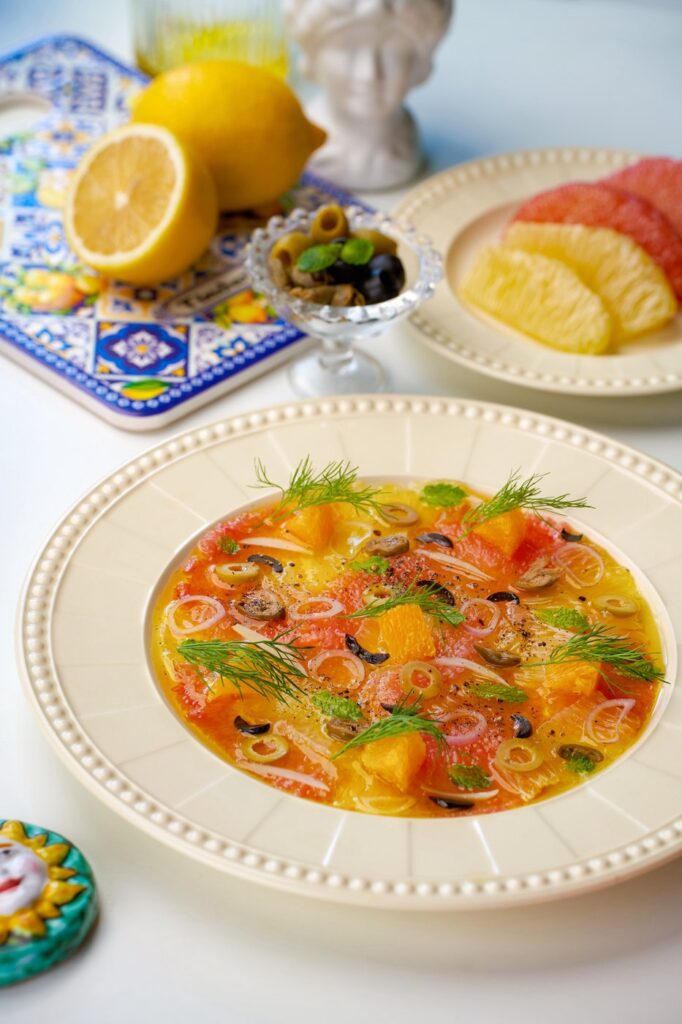
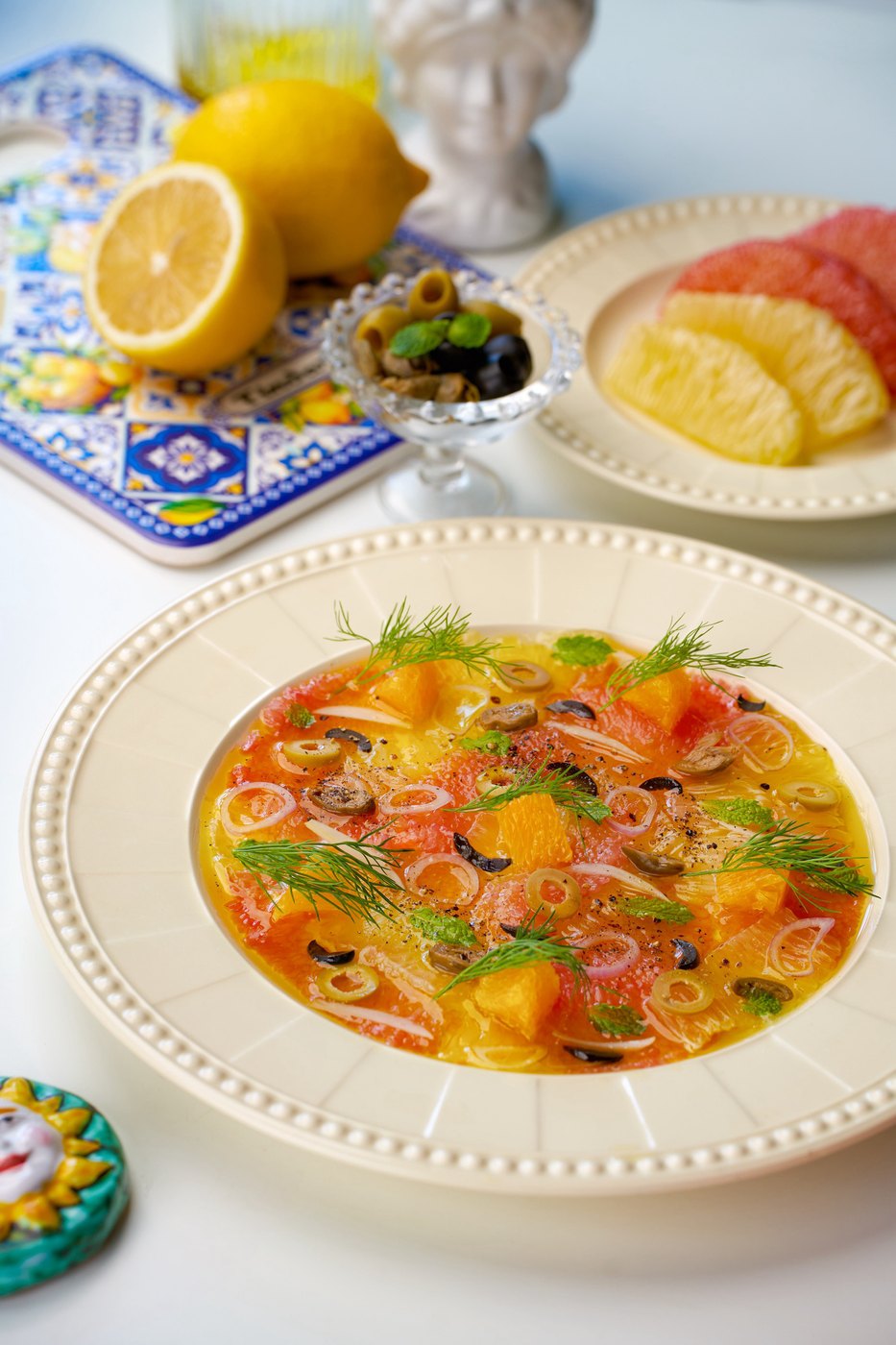
Sicily runs on citrus all year round. Our Citrus Salad (280 THB) is a good example. It is a dish so simple that you will rarely find it in a restaurant in Sicily, because Sicilians think of it as something their mothers and grandmothers make at home. That is exactly why we serve it.
Almond
Almond trees are the first to bloom in Sicily at the end of winter, and almond runs through Sicilian sweets. Mandorla is the Italian word for almond, which is where our name comes from.
Aubergine, capers and olives
The vegetables of a hot, dry island. Aubergine is the heart of the most famous Sicilian pasta, and capers and olives turn up in almost every savoury dish.
Five dishes that explain Sicilian food
1. Pasta alla Norma
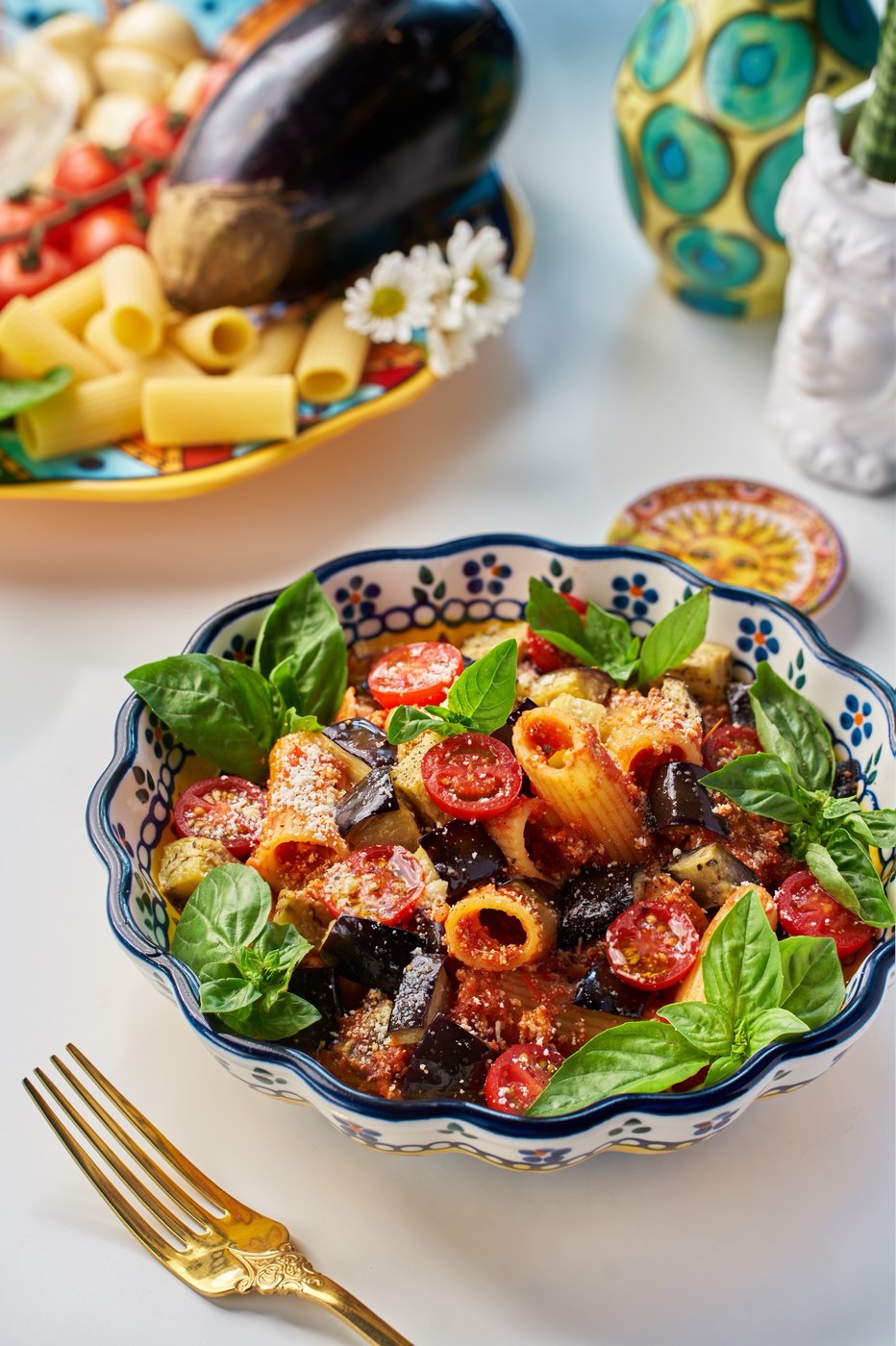
The signature of Catania, on the east coast under Mount Etna. Pasta with aubergine, tomato and ricotta salata, a firm salted ricotta grated on top. Ours is the Rigatoni alla Norma (300 THB).
2. Seafood couscous
The clearest trace of Arab Sicily on any menu. In north western Sicily couscous is served with seafood, and the town of San Vito Lo Capo holds an international couscous festival every September. Our Seafood Couscous (680 THB) is our signature dish and serves two.
3. Stuffed calamari
A seaside favourite. The filling is a roll call of Sicilian flavours: capers, sun dried tomatoes, olives, anchovies and breadcrumbs. Ours is the Stuffed Baby Calamari Sicilian Mamma Style (380 THB), in a Sicilian tomato sauce.
4. Cannoli and cassata
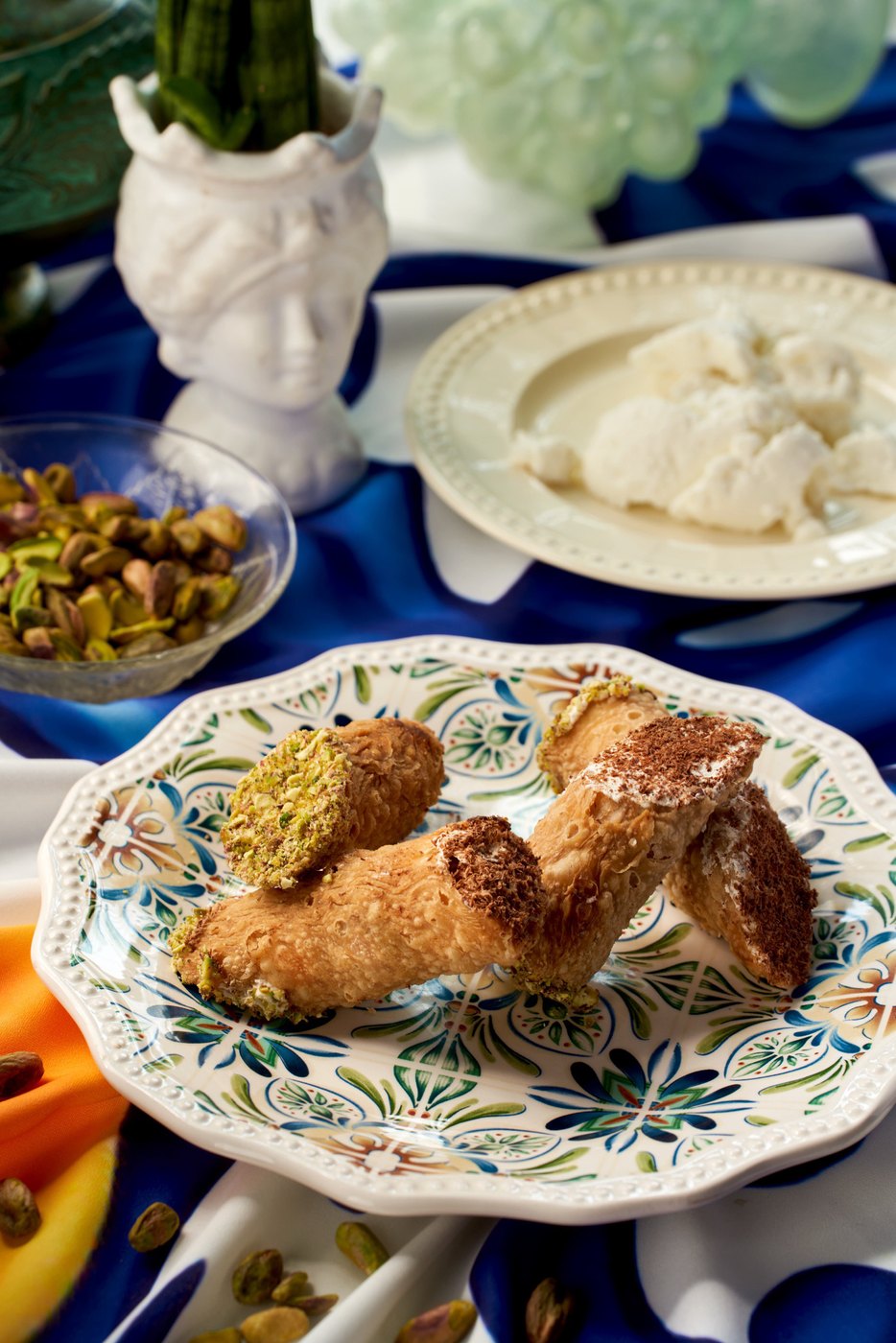
Sicilian pastry is its own tradition, built on almond and ricotta. A cannolo is a crisp fried pastry tube with a sweet creamy filling. Cassata is a sponge cake layered with sweet ricotta and decorated with candied fruit. Sette veli, the seven layer chocolate cake, is the modern classic. All three are 250 THB on our menu.
5. Granita
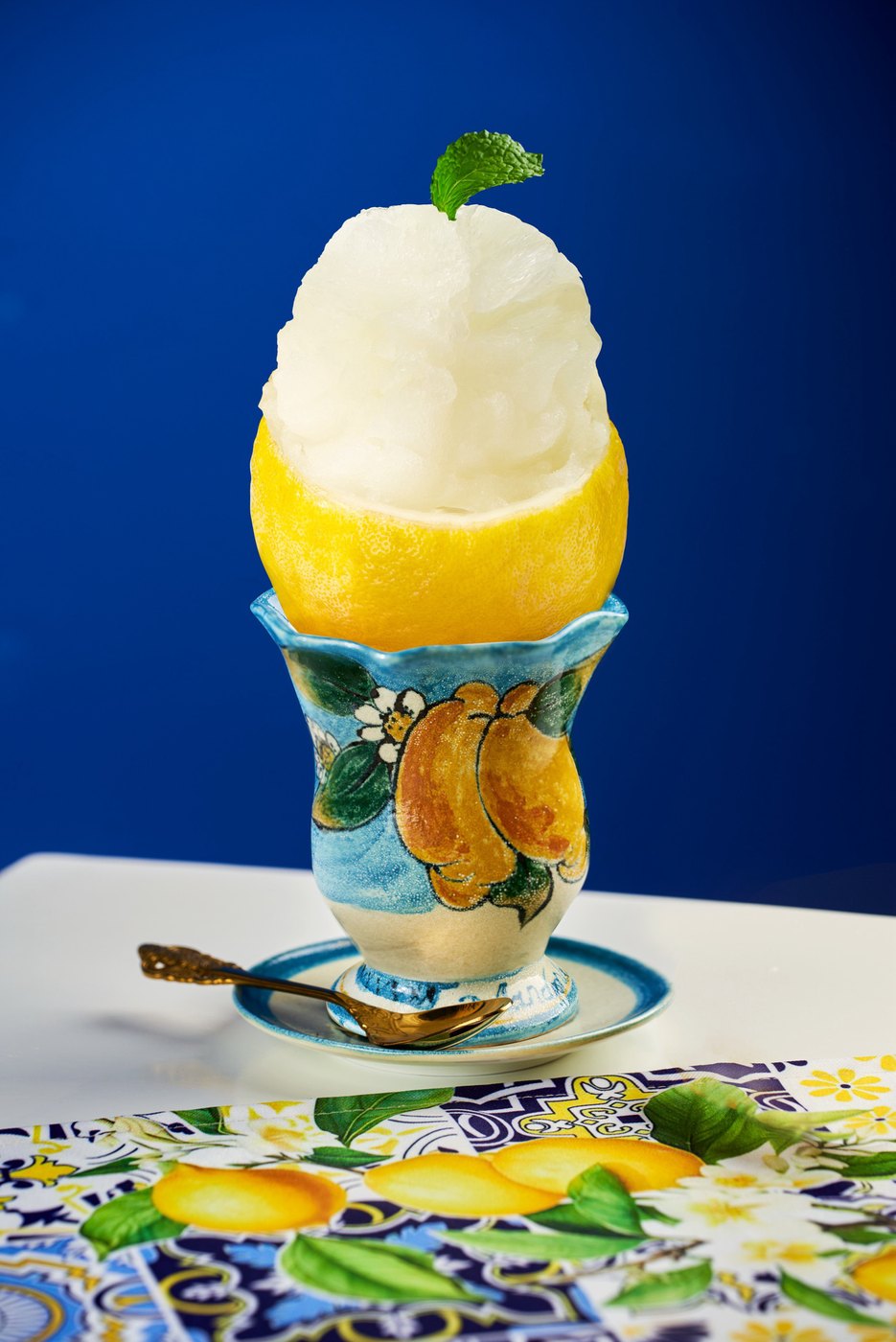
A semi frozen dessert of water, sugar and natural flavour, with a grainy yet creamy texture, coarser than sorbet and smoother than a slushie. The real thing comes from the north east of the island, around Messina, and Sicilians famously eat it for breakfast with a soft brioche bun. We serve Lemon, Almond, Mango, and Coffee with whipped cream, each 250 THB.
How to eat like a Sicilian
A Sicilian meal is not one big plate. It is a sequence, eaten slowly, with the table talking between courses.
- Antipasti to open, shared in the middle of the table.
- Primo, the pasta or risotto.
- Secondo, a main course of meat or seafood, often from the grill, with something green beside it.
- Dolci, dessert, and very often a granita or gelato, because Sicily believes a meal should finish cold and sweet.
- Digestivo, a grappa or a limoncello to close.
For two people, order one or two antipasti to share, one pasta each, one main between you and one dessert each. For four, three or four antipasti, two or three pastas and two mains. Share everything.
And eat late. Sicilians eat late and stay long, which is why we open at 16:00 and take the last food order at 22:00.
What to drink with it
Sicily makes serious wine. The two names to know are Grillo, a crisp white grape that suits seafood, and Nero d’Avola, the island’s best known red. The volcanic slopes of Mount Etna produce both whites and reds, and the small islands of Pantelleria and Lipari make sweet passito wines for dessert. All of these are on our wine list, with Grillo di Sicilia from Planeta at 220 THB a glass and Nero d’Avola from La Calla at 250 THB a glass.
Frequently asked questions
What is Sicilian food?
Sicilian food is the regional cuisine of Sicily, the island at the toe of Italy. It is shaped by Greek, Arab, Norman and Spanish rule, and is known for seafood, citrus, almond, couscous, aubergine dishes like pasta alla Norma, and desserts such as cannoli, cassata and granita.
How is Sicilian food different from Italian food?
Sicilian food is Italian food from Sicily, but it carries Arab and Greek influence the north of Italy does not have. It uses more seafood, citrus and almond, includes couscous, and has a separate dessert tradition built on ricotta and almond.
What are the most famous Sicilian dishes?
Pasta alla Norma, seafood couscous, stuffed calamari, cannoli, cassata and granita are among the best known. All of them are on the menu at Mandorla in Chiang Mai.
Where can I eat Sicilian food in Chiang Mai?
At Mandorla Sicilian Bistrot, 48/2 Siri Mangkalajarn Road, at the mouth of Soi 7 in Nimman. It is the Sicilian restaurant in Chiang Mai, open daily from 16:00 to 23:00, with 302 Google reviews at 4.7 stars (October 2026).
Is Sicilian food spicy?
Generally no. Sicilian cooking relies on olive oil, citrus, capers, olives and herbs rather than chilli heat. On our menu the Penne all’Arrabbiata (290 THB) is the dish built around chilli. Please tell us about any allergies when you order.